You look in the mirror and see someone inadequate. Your friend looks at you and sees someone capable. Your resume says "experienced." Your mind says "impostor." This gap between self image and reality isn't random—it's built from years of collected moments, filtered through emotional memory, and reinforced by patterns you might not even notice.
The way you see yourself is almost never the way others see you. And it's often not aligned with the objective facts of your life. This isn't about "low self-esteem" being wrong—it's about understanding why the version of yourself you carry in your mind feels so convincing, even when evidence suggests otherwise.
Your self-image is built from early messages, selective memory and a mind that weighs mistakes more heavily than successes, so it often lags behind reality. It shifts slowly, through repeated evidence that contradicts the old story. Collect that evidence on purpose, notice how you dismiss it, and question harsh conclusions instead of treating them as facts.
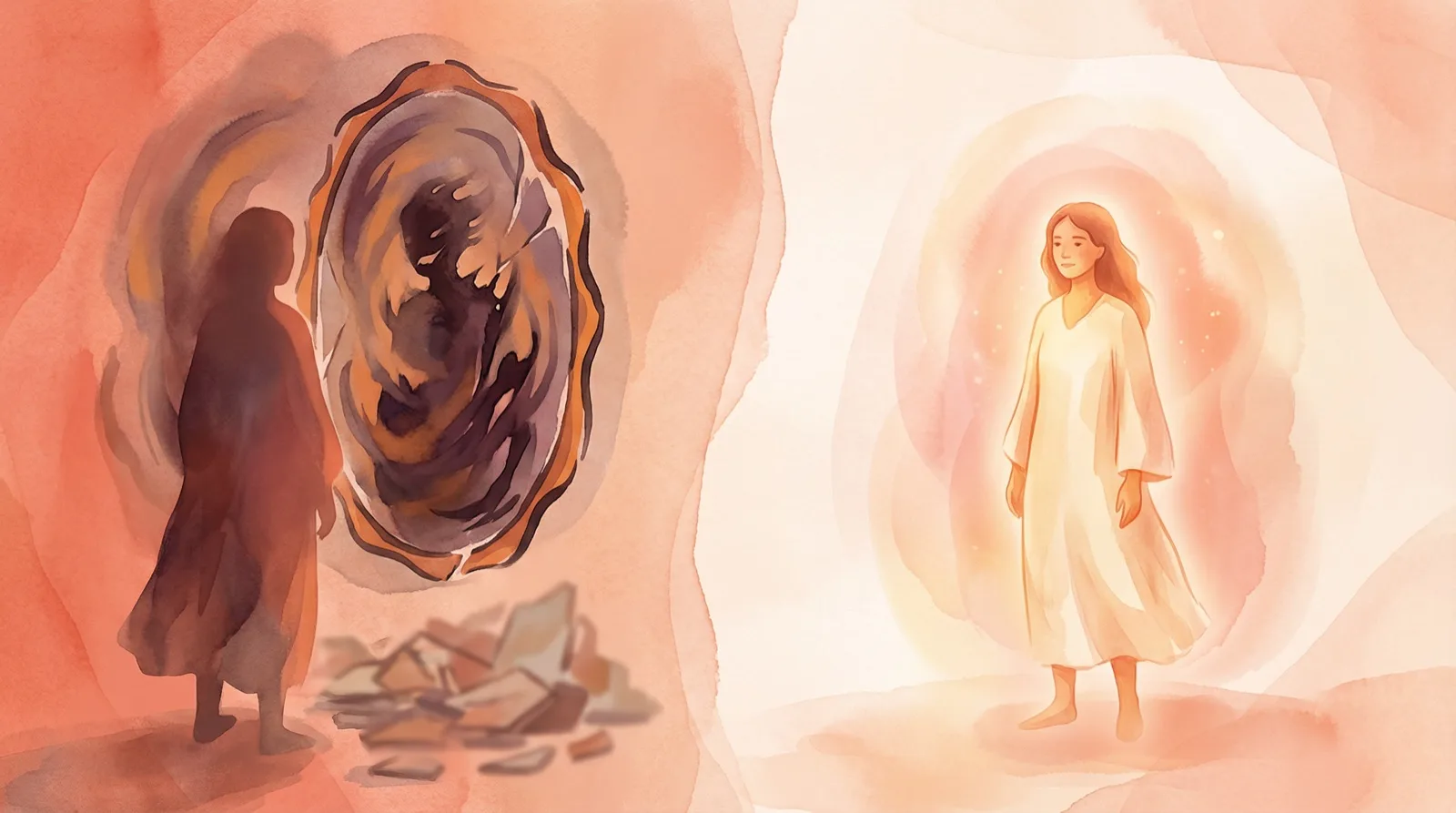
The Gap Between Self Image and Reality
Your self-image—the mental picture of who you are—forms through a complex process. It's not just "what you think of yourself." It's a composite built from:
- Early messages: What you were told (or not told) about your worth, capability, or lovability
- Emotional memory: Failures remembered vividly; successes dismissed or forgotten
- Selective attention: Noticing evidence that confirms existing beliefs about yourself
- Comparison patterns: Measuring yourself against others' highlight reels
- Negative bias: The brain's tendency to weight negative information more heavily than positive
Meanwhile, reality—the version visible to others or measurable by facts—operates independently of this internal narrative.
This disconnect is so common that it has a name when it shows up around competence: the impostor phenomenon, which the American Psychological Association's Monitor covered in depth in a 2022 feature. People who experience it keep doubting themselves despite plenty of outside evidence that they're capable.
Why Your Self Image Doesn't Match Reality
Emotional Truths Feel Like Factual Truths
When you feel inadequate, your mind searches for evidence to support that feeling. You remember the time you stumbled over your words in a meeting, but forget the ten meetings where you contributed clearly. You recall the relationship that ended, but downplay the ones where you showed up consistently.
This is called confirmation bias: the well-documented tendency to look for, notice and remember evidence that fits what we already believe (Nickerson, 1998). Your self-image becomes a filter: you see what confirms it and dismiss what contradicts it.
Early Experiences Create Lasting Templates
Early experiences act like templates. If approval tended to arrive only when you performed well, your self-image may still be calibrated to that old rule, so new successes get filed away as exceptions rather than counted as evidence. For more on where this comes from, see the guide on low self-esteem.
Try this today: Pick one thing you did this week and describe it twice: once the way your inner critic would, and once the way a fair, neutral colleague would. Put the two versions side by side. The difference between them is the gap between self-image and reality, written down.
The Brain Prioritizes Threat Detection
Your brain evolved to keep you safe, not to make you feel good about yourself. It's wired to notice what went wrong, what could go wrong, and what might threaten your social standing or survival.
Psychologists call this negativity bias. A widely cited review concluded that, across many areas of life, bad events, feedback and impressions tend to weigh more heavily than good ones (Baumeister et al., 2001). So self-image is naturally skewed toward the negative. One criticism can outweigh ten compliments. One mistake can feel like evidence of fundamental inadequacy, while multiple successes feel like "luck" or "not counting."
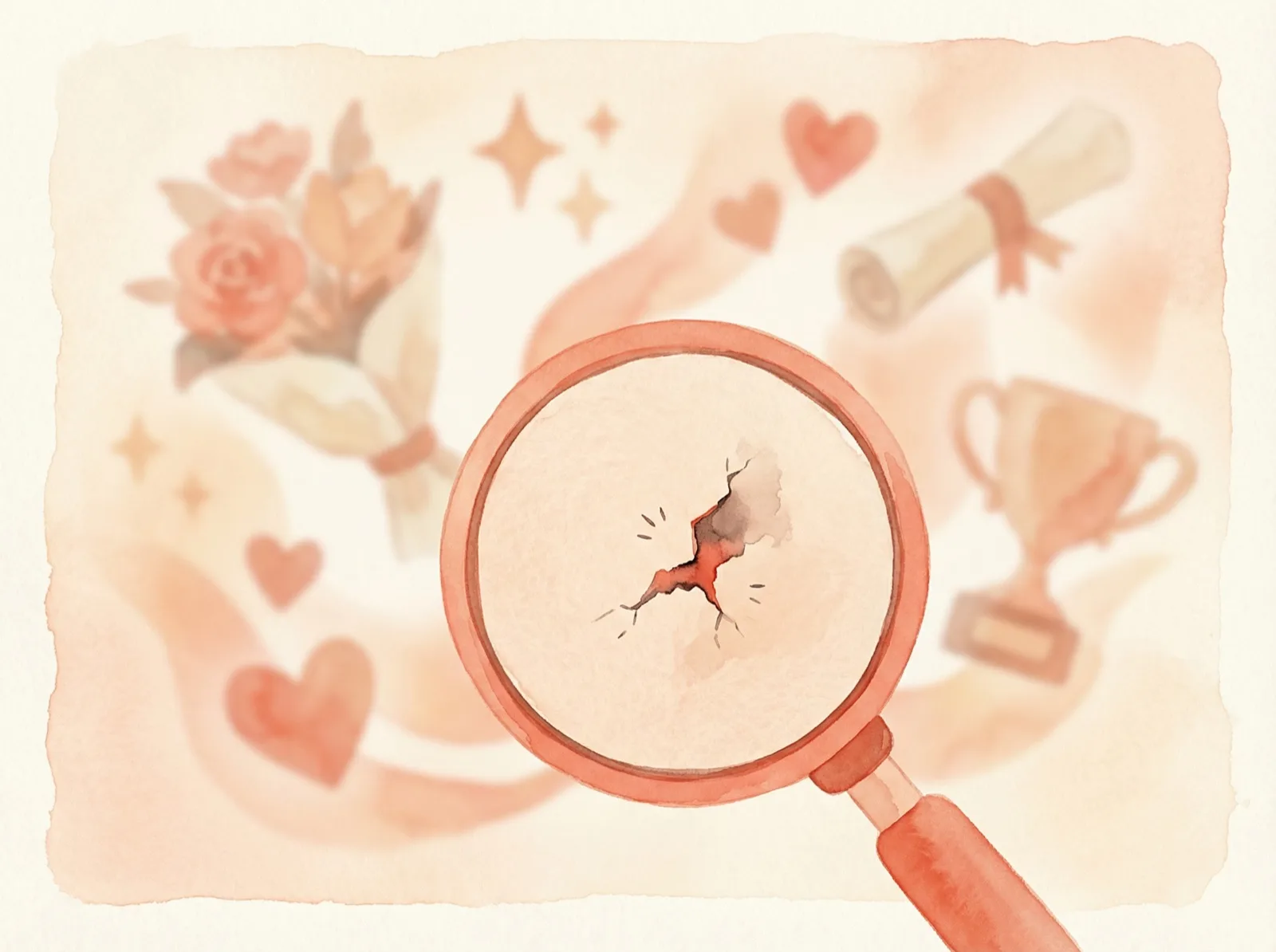
Why Photos and Mirrors Don't Match How You See Yourself
If you've ever winced at a photo of yourself, there's a simple reason. The face you know best is the one in the mirror, which is reversed. In a classic study, people preferred the mirror-image version of their own face, while their friends preferred the true image, the one everyone else sees (Mita, Dermer & Knight, 1977). We tend to like what's familiar, so a photo can feel "off" without anything actually being wrong with it.
That's a useful reminder for self-image in general: the version of you that feels most true is often just the most familiar one, not the most accurate.
What Distorts Self Perception?
Comparison Without Context
When you compare your internal experience (full of doubt, effort, and mistakes) to someone else's external presentation (polished, confident-seeming, successful), the comparison is inherently unfair.
You're comparing your behind-the-scenes to their highlight reel. Your self-image vs their reality—or more accurately, their curated version of reality.
The Inner Critic's Commentary
Your inner critic doesn't just observe—it narrates. It adds interpretation, judgment, and prediction to every neutral fact. "I made a mistake" becomes "I always mess things up." "I felt anxious" becomes "I'm fundamentally broken."
This narration shapes self-image far more powerfully than facts do, because it feels like truth rather than interpretation.
When a harsh judgment shows up, put "the story I'm telling myself is…" in front of it. "The story I'm telling myself is that everyone noticed my mistake." It turns a verdict back into what it is: one interpretation among several.
Impostor Phenomenon
Even when external reality clearly shows competence—degrees earned, promotions received, relationships maintained—many people still feel like frauds. This is the impostor phenomenon: the persistent belief that you've somehow tricked everyone and will eventually be "found out."
It's far from rare. A systematic review of 62 studies found prevalence estimates for impostor feelings ranging from 9% to 82%, depending largely on how they were measured (Bravata et al., 2020). Whatever the exact figure, if you feel this way, you have a lot of company.
How Self Image Shifts Over Time
Your self-image isn't fixed, even though it can feel permanent. It shifts—sometimes gradually, sometimes suddenly—based on:
- New experiences: Especially ones that challenge existing beliefs
- Repetition: Consistently showing up in ways that contradict your negative self-narrative
- External feedback: Particularly from people you trust, delivered at moments when you're open to hearing it
- Internal narrative change: Actively questioning and reframing the stories you tell yourself
- Emotional healing: Processing old experiences that originally shaped your self-perception
The gap between self-image and reality doesn't close overnight. But it can narrow, slowly, as you begin to notice the discrepancies and question which version is more accurate.
The version of yourself you carry in your mind was built over years. It won't change because of one positive thought. It changes through repeated experiences that gently contradict the old narrative—and through learning to trust external evidence as much as internal feeling.
How Do You Close the Gap Between Self-Image and Reality?
Gather External Evidence
Your self-image is biased. Reality is not. Start collecting objective facts:
- What have you accomplished in the past year? (List it, even if it feels "small.")
- What feedback have you received from others? (Even casual compliments.)
- What challenges have you navigated? (Including the ones you think "anyone could do.")
This isn't about "thinking positive." It's about fact-checking your internal narrative against reality.
Notice the Filtering Process
Pay attention to how your mind dismisses positive evidence:
- "That doesn't count because..."
- "They're just being nice."
- "Anyone could have done that."
- "I got lucky."
When you catch yourself filtering out positive reality to maintain a negative self-image, you've found the gap. That's where the work happens.

Question the Narrative
When your self-image says something harsh, ask (the guide on why you keep doubting yourself has more on this):
- Is this feeling, or fact?
- Would I say this to someone I care about?
- What evidence contradicts this belief?
- What would change if I believed the opposite?
You don't have to believe the opposite immediately. You just have to question whether the current belief is as solid as it feels.
Practice Self-Compassion
The gap between self-image and reality often widens because of self-judgment. You see the gap, feel ashamed of it, and the shame reinforces the negative self-image.
Self-compassion interrupts this cycle. It allows you to notice the discrepancy without adding another layer of "I'm broken for seeing myself this way."
Try this now: Place a hand on your heart and say: "It makes sense that my self-image doesn't match reality. I built this view of myself over years, and it's going to take time to update it. I can be patient with the process." Notice if this feels different than beating yourself up for "still struggling."
When to Seek Support
If the gap between self-image and reality is causing significant distress—preventing you from pursuing opportunities, maintaining relationships, or trusting your own judgment—therapy can help.
The NHS notes that talking therapies such as counselling or cognitive behavioural therapy (CBT) can help with low self-esteem, and acceptance and commitment therapy (ACT) is another common approach to a harsh or distorted view of yourself. If low mood or anxiety has lasted more than a couple of weeks, a doctor is a good first step.
You're not "broken" for having a negative self-image. You learned to see yourself this way for reasons that once made sense. And you can learn to see yourself more accurately—not through forced positivity, but through gentle, repeated questioning of the old narrative.
Repetition is also what Gentle, our iPhone app for daily affirmations, is built on: short, realistic lines at the hours you choose, so the more accurate version of you gets heard as often as the old one.
Short, kind lines at the hours you choose
Your self-image changes through repetition, so it helps to hear the more accurate version often:
"I'm allowed to count what I've actually done."
"I can be patient while my view of myself catches up."
Gentle is a free iPhone app that sends short, kind affirmations like these at the hours you choose and keeps one on your Lock Screen. No account needed; an optional Premium subscription unlocks all themes, topic choice and unlimited breathing.
Get Gentle on the App StoreFor iPhone with iOS 18 or later.
- Low self-esteem: why it happens and how to rebuild it — Where it comes from, why it lingers, and small ways to rebuild.
- Why do I keep doubting myself? — Why self-doubt feels automatic, and how to quiet it.
- How to recognize your inner critic — Spot its patterns and answer with compassion.
Frequently Asked Questions
Is it normal for self-image to not match reality?
Yes. Almost everyone has some gap between how they see themselves and how things actually are. It becomes a problem when it significantly affects your decisions, relationships or wellbeing, not simply because it exists.
Why do I see flaws that others don't notice?
You have access to your whole inner experience: every mistake, every moment of doubt, every imperfection. Other people see the outside: your behaviour, your contributions, your presence. That difference naturally makes your view of yourself harsher than theirs.
Can self-image ever be too positive?
Yes. When self-image is inflated beyond reality, often as a defence, it can get in the way of growth, damage relationships or lead to poor decisions. For most people who struggle with self-doubt, though, the gap runs the other way.
How long does it take to change a distorted self-image?
There's no fixed timeline. Some people notice shifts within weeks of regularly questioning how they see themselves; for others it takes months or longer. Consistency matters more than speed.
What's the difference between self-image and self-esteem?
Self-image is the mental picture of who you are: your traits, abilities and characteristics. Self-esteem is how you feel about that picture. You can have an accurate self-image and low self-esteem, or a distorted self-image with high self-esteem.
Sources
- Bravata, D. M., et al. (2020). Prevalence, predictors, and treatment of impostor syndrome: a systematic review. Journal of General Internal Medicine, 35(4), 1252–1275. doi:10.1007/s11606-019-05364-1
- American Psychological Association, Monitor on Psychology (June 2022). Feature on the impostor phenomenon.
- Nickerson, R. S. (1998). Confirmation bias: A ubiquitous phenomenon in many guises. Review of General Psychology, 2(2), 175–220. doi:10.1037/1089-2680.2.2.175
- Baumeister, R. F., Bratslavsky, E., Finkenauer, C., & Vohs, K. D. (2001). Bad is stronger than good. Review of General Psychology, 5(4), 323–370. doi:10.1037/1089-2680.5.4.323
- NHS. Raising low self-esteem.
- Mita, T. H., Dermer, M., & Knight, J. (1977). Reversed facial images and the mere-exposure hypothesis. Journal of Personality and Social Psychology, 35(8), 597–601.